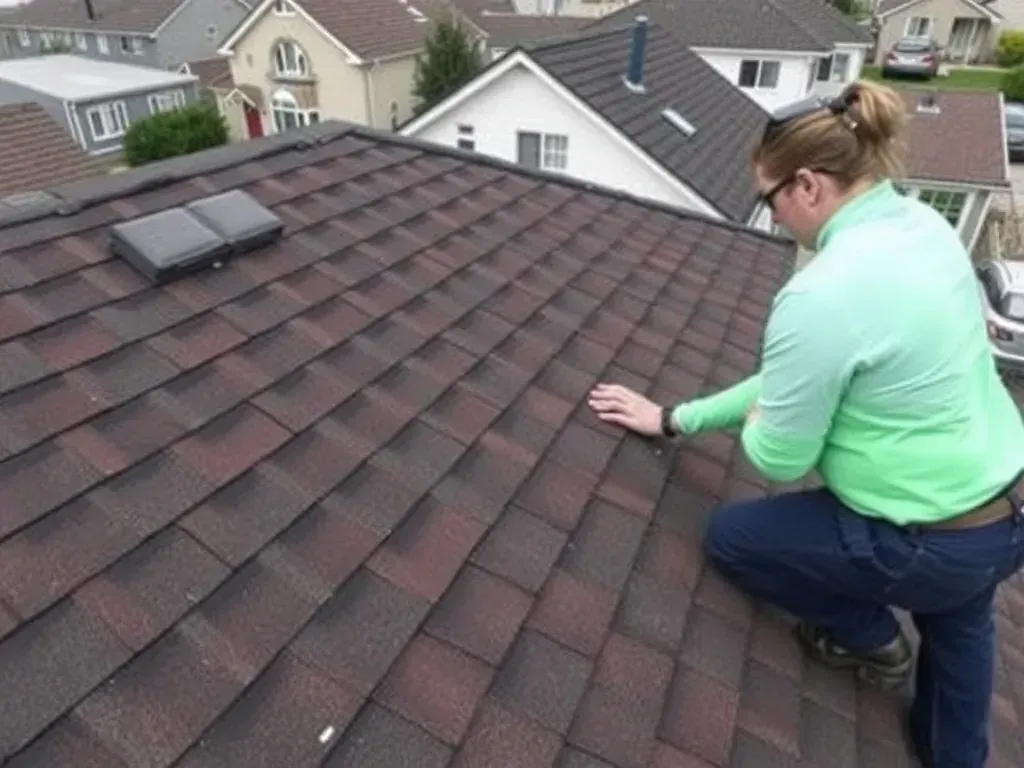
Hail damage repair means replacing the bruised, cracked shingles a storm left behind, then checking what sits underneath for water that already found its way in. Hail rarely punches a clean hole.
More often it knocks granules loose from an asphalt shingle, and the exposed asphalt begins to dry and flake at the edges. That explains why a roof can look fine from the driveway and still be years closer to end-of-life wear.
On the Victorian rowhomes and post-war twin homes common around Trenton, we find damage at the same spots every time: pipe boots, chimney flashing, and the drip edge along the rake. Those are the details adjusters photograph first.
We refit with GAF or Owens Corning architectural shingles, which shed hail impact better than the older three-tab shingle. Anywhere we open the decking, we lay ice-and-water shield along the eave so winter ice dams cannot wick water back under the field course.
Replacing a few squares of shingles costs far less than a full tear-off, and it keeps the rest of the roof out of the dumpster. We sort reusable material on site and haul the rest in one load instead of three.
If rain is coming before your adjuster gets there, we anchor heavy tarps over the damaged slope. That protects the roof deck without nailing through anything that still needs to be documented.